
<< Back to News

ARTICLE
Pre-Conference Perspective: Incremental Gains Are the New Competitive Edge
As the industry heads to the Fuel Ethanol Workshop in St. Louis, the conversation around carbon intensity is evolving. Early 45Z discussions often focused on large capital projects tied directly to tax-credit returns. Today, many producers are prioritizing investments that strengthen plant economics with or without policy incentives.
That shift is not driven by uncertainty around the program. It reflects a growing recognition that the industry’s most competitive plants will be those that use this window to lock in long-term efficiency advantages.
At Whitefox Technologies, we see investments increasingly evaluated not only by credit potential, but by their ability to reduce energy and water use, improve operating margins, and position facilities to remain competitive beyond 45z.
Efficiency Will Matter More in 2030
When the 45Z credit period concludes in 2030, the ethanol industry will likely look very different. Plants that used this period to modernize operations and improve efficiency will have established a meaningful competitive advantage.
Technology deployment is accelerating, expansion announcements continue across the industry, and additional production capacity is expected to come online over the next several years. As producers pursue lower-carbon operations, many are also using the opportunity to debottleneck facilities and expand throughput.
One of the most capital-intensive — and impactful — areas to address is distillation, dehydration, and evaporation (DD&E), which remains one of the clearest opportunities to unlock measurable efficiency gains.
In February 2026, Whitefox Technologies announced a new ICE®-XL installation with Chief Ethanol as part of a greenfield DD&E system at its Hastings facility. The project supports Chief’s long-term strategy to modernize operations following 40 years of production and illustrates how some producers are using the current credit period to accelerate modernization while strengthening long-term competitiveness.
“When building our strategy to modernize our Hastings facility, the incorporation of membranes quickly became an advantage we knew we wanted to take in order to prepare for the future,” said Wayne Garrett, G
eneral Manager of Chief Ethanol. “By working with Whitefox, we are accessing the most efficient dehydration technology in the market and leveraging their processing expertise to build a highly energy-efficient system, ultimately setting a new industry standard.”
The timing is notable following the House passage of year-round E15 legislation on May 13. If the Nationwide Consumer and Fuel Retailer Choice Act advances through the Senate and is signed into law, domestic ethanol demand could expand further, creating additional market opportunities for producers positioned to supply lower-carbon gallons.
Separation Efficiency as a Competitive Advantage
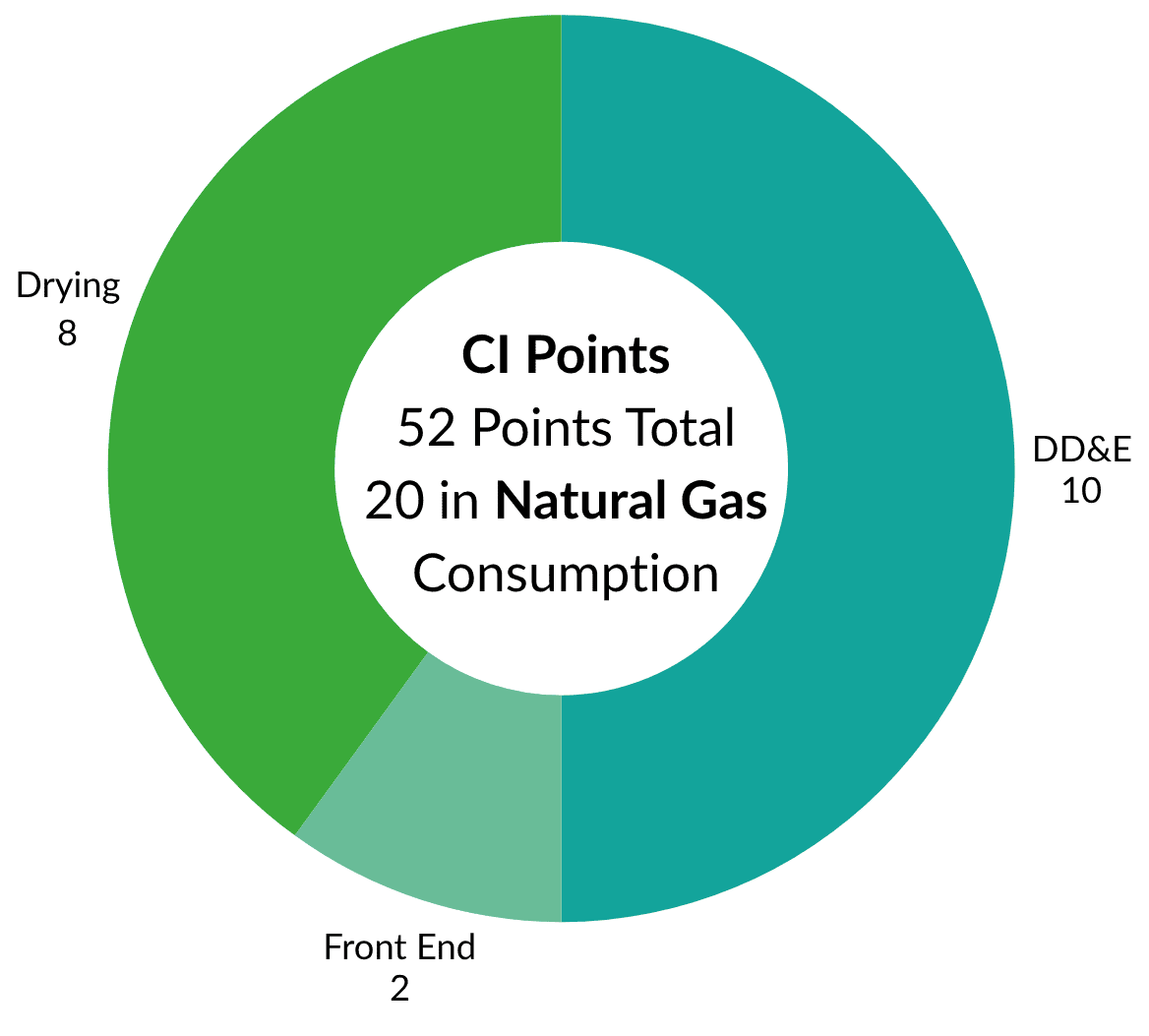
Separating water from ethanol after fermentation accounts for roughly half of the energy consumed in ethanol production through distillation, dehydration, and evaporation. Historically, these systems were optimized primarily for reliability and throughput rather than maximum energy efficiency.
The Whitefox ICE®-XL platform was developed to help producers significantly reduce DD&E energy consumption by replacing molecular sieves with membrane technology and integrating progressive heat recovery strategies. In some applications, the design enables an industry-leading 6500 BTU/gallon energy consumption.
This approach is already producing measurable results at Western Plains Energy, which installed the Whitefox ICE®-XL system in October 2024.
In the March 2026 issue of Ethanol Producer Magazine, Derek Peine shared the operational impact the company has experienced following its focus on DD&E efficiency, including a reported 35% reduction in plant-wide energy use.
 “Today, we’re likely the lowest energy user, most energy-efficient ethanol plant probably in the country, or we’re at least in the top five,” said Peine. “All improvement and energy efficiency is attributed to the ICE XL system.”
While ethanol-water separation may sound straightforward, it has historically been one of the industry’s most energy-intensive processes. Conventional molecular sieve systems require feed streams to be dried to the ethanol-water azeotrope before dehydration can occur, limiting overall energy recovery potential.
Membrane technology addresses several of those constraints while also enabling additional heat-integration opportunities across DD&E operations.
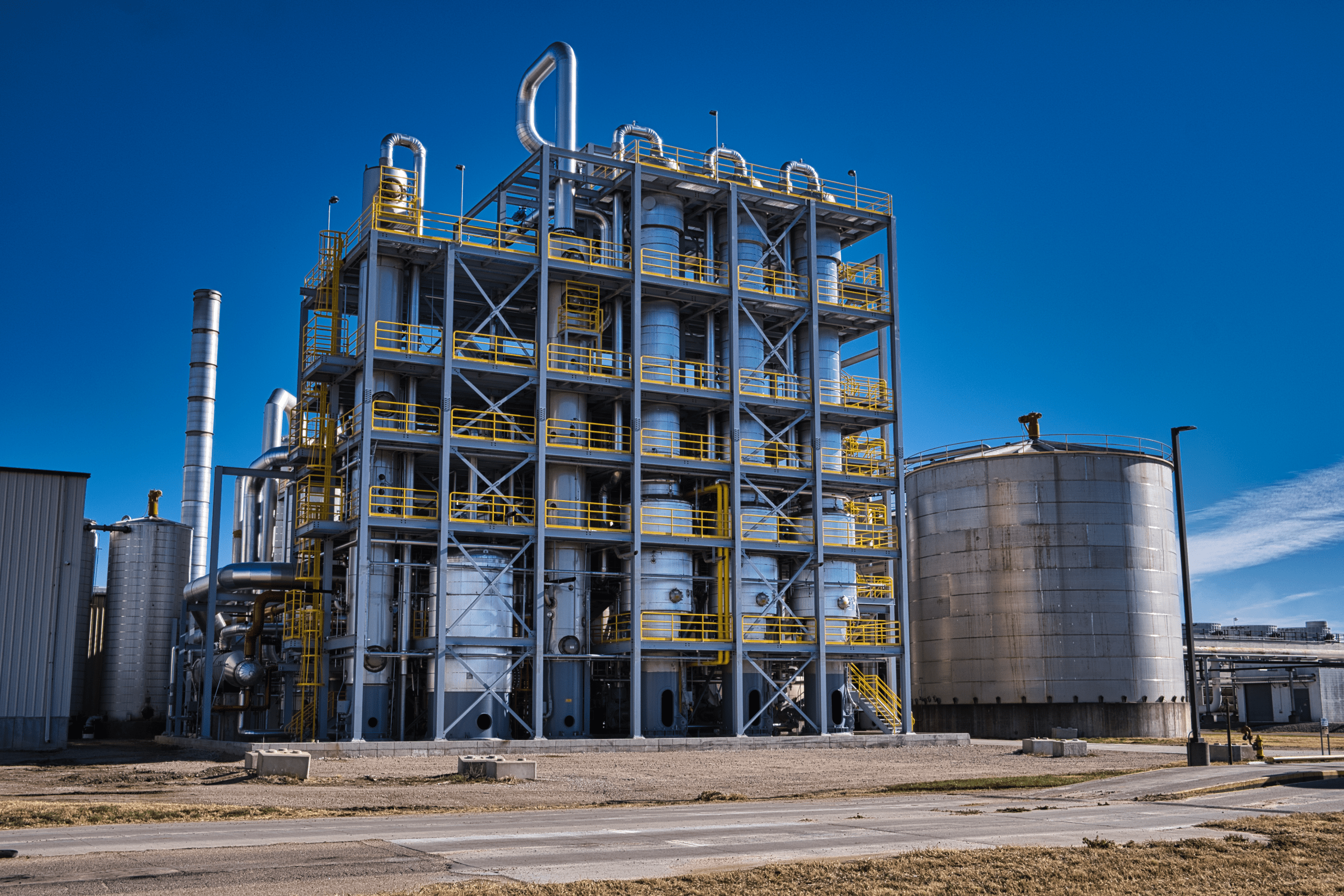
“The Whitefox ICE XL at Western Plains Energy in Oakley, KS“
Preparing for Beyond 2030
Strategic technology adoption will play a major role in determining which producers maintain competitive advantages after the 45Z credit period expires.
Membrane systems offer flexibility because they can address operational bottlenecks within legacy systems without requiring a full plant replacement strategy.
At several facilities, Whitefox’s ICE® platform has increased DD&E capacity by up to 30% by processing molecular sieve regeneration streams while reducing energy consumption by approximately 1,000–1,200 BTU per gallon. In many cases, projects achieve payback periods within 18–24 months even without 45Z incentives.
During the 45Z period, the combination of lower energy use and increased throughput creates a compelling economic case, particularly because membrane systems integrate well alongside other plant-efficiency technologies.
The timing matters. Producers making investment decisions in Q2 or Q3 of 2026 still have the opportunity to capture multiple years of 45Z benefits while positioning their facilities for longer-term operational advantages.
Final Thoughts
The producers that emerge strongest from the 45Z era may not be those that captured the largest credits, but those that used this period to permanently lower operating costs and improve production efficiency.
As competition intensifies over the coming years, incremental gains may ultimately become the industry’s most durable competitive advantage.
As the industry gathers at the 2026 Fuel Ethanol Workshop, we look forward to contributing to conversations around innovation, efficiency, and the future of low-carbon ethanol production.